Contemplation
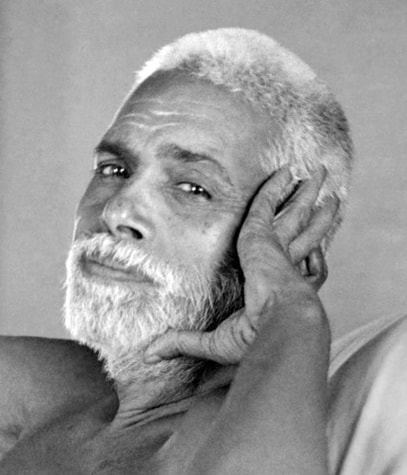
Contemplation helps one to overcome the illusion that the Self must be visual. ~ Sri Ramana Talk 196
A selection of Sri Ramana's talks discussing 'contemplation'.
Talk 21.
Mr. Ellappa Chettiar, a member of the Legislative Council of Madras Presidency and an influential Hindu, asked: “Why is it said that the knowledge born of hearing is not firm, whereas that born of contemplation is firm?”
M.: On the other hand it is said that hearsay knowledge (paroksha) is not firm, whereas that born of one’s own realisation (aparoksha) is firm.
It is also said that hearing helps the intellectual understanding of the Truth, that meditation makes the understanding clear, and finally that contemplation brings about realisation of the Truth.
Furthermore, they say also that all such knowledge is not firm and that it is firm only when it is as clear and intimate as a gooseberry in the hollow of one’s palm.
There are those who affirm that hearing alone will suffice, because a competent person who had already, perhaps in previous incarnations, qualified himself, realises and abides in peace as soon as he hears the Truth told him only once, whereas the person not so qualified must pass through the stages prescribed above, before falling into samadhi.
Talk 34.
Sitting in Maharshi’s presence brings peace of mind. I used to sit in samadhi for three or four hours together. Then I felt my mind took a form and came out from within. By constant practice and meditation it entered the Heart and was merged into it. I conclude that the Heart is the resting place of mind. The result is peace. When the mind is absorbed in the Heart, the Self is realised. This could be felt even at the stage of concentration (dharana).
I asked Maharshi about contemplation. He taught me as follows: When a man dies the funeral pyre is prepared and the body is laid flat on the pyre. The pyre is lit. The skin is burnt, then the flesh and then the bones until the whole body falls to ashes. What remains thereafter? The mind. The question arises, ‘How many are there in this body - one or two?’ If two, why do people say ‘I’ and not ‘we’? There is therefore only one. Whence is it born? What is its nature (swaroopa)? Enquiring thus the mind also disappears. Then what remains over is seen to be ‘I’. The next question is ‘Who am I?’ The Self alone. This is contemplation. It is how I did it. By this process attachment to the body (dehavasana) is destroyed. The ego vanishes. Self alone shines. One method of getting mind-dissolution (manolaya) is association with great ones - the yoga adepts (Yoga arudhas). They are perfect adepts in samadhi. Self-Realisation has been easy, natural, and perpetual to them. Those moving with them closely and in sympathetic contact gradually absorb the samadhi habit from them.
Talk 187.
D.: I maintain that the physical body of the man sunk in samadhi as a result of unbroken contemplation of the Self becomes motionless for that reason. It may be active or inactive. The mind fixed in such contemplation will not be affected by the body or the senses being restless. A disturbance of the mind is not always the forerunner of physical activity. Another man asserts that physical unrest certainly prevents nirvikalpa samadhi or unbroken contemplation. What is your opinion? You are the standing proof of my statement.
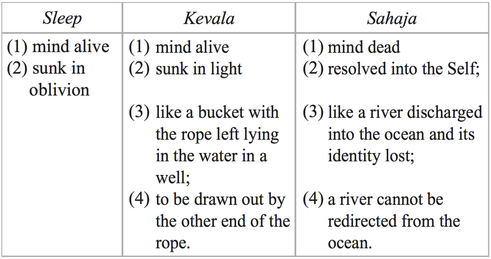
M.: Both of you are right, you refer to sahaja nirvikalpa and the other refers to kevala nirvikalpa. In the one case the mind lies immersed in the Light of the Self (whereas the same lies in the darkness of ignorance in deep sleep). The subject discriminates one from the other - samadhi, stirring up from samadhi, and activity thereafter, unrest of the body, of the sight of the vital force and of the mind, the cognizance of objects and activity, are all obstructions for him.
In sahaja, however, the mind has resolved itself into the Self and has been lost. Differences and obstructions mentioned above do not therefore exist here. The activities of such a being are like the feeding of a somnolent boy, perceptible to the onlooker (but not to the subject). The driver sleeping on his moving cart is not aware of the motion of the cart, because his mind is sunk in darkness. Similarly the sahaja Jnani remains unaware of his bodily activities because his mind is dead - having been resolved in the ecstasy of Chit Ananda (Self).
The two words contemplation and samadhi have been used loosely in the question.
Contemplation is a forced mental process, whereas samadhi lies beyond effort.
Mr. Ellappa Chettiar, a member of the Legislative Council of Madras Presidency and an influential Hindu, asked: “Why is it said that the knowledge born of hearing is not firm, whereas that born of contemplation is firm?”
M.: On the other hand it is said that hearsay knowledge (paroksha) is not firm, whereas that born of one’s own realisation (aparoksha) is firm.
It is also said that hearing helps the intellectual understanding of the Truth, that meditation makes the understanding clear, and finally that contemplation brings about realisation of the Truth.
Furthermore, they say also that all such knowledge is not firm and that it is firm only when it is as clear and intimate as a gooseberry in the hollow of one’s palm.
There are those who affirm that hearing alone will suffice, because a competent person who had already, perhaps in previous incarnations, qualified himself, realises and abides in peace as soon as he hears the Truth told him only once, whereas the person not so qualified must pass through the stages prescribed above, before falling into samadhi.
Talk 34.
Sitting in Maharshi’s presence brings peace of mind. I used to sit in samadhi for three or four hours together. Then I felt my mind took a form and came out from within. By constant practice and meditation it entered the Heart and was merged into it. I conclude that the Heart is the resting place of mind. The result is peace. When the mind is absorbed in the Heart, the Self is realised. This could be felt even at the stage of concentration (dharana).
I asked Maharshi about contemplation. He taught me as follows: When a man dies the funeral pyre is prepared and the body is laid flat on the pyre. The pyre is lit. The skin is burnt, then the flesh and then the bones until the whole body falls to ashes. What remains thereafter? The mind. The question arises, ‘How many are there in this body - one or two?’ If two, why do people say ‘I’ and not ‘we’? There is therefore only one. Whence is it born? What is its nature (swaroopa)? Enquiring thus the mind also disappears. Then what remains over is seen to be ‘I’. The next question is ‘Who am I?’ The Self alone. This is contemplation. It is how I did it. By this process attachment to the body (dehavasana) is destroyed. The ego vanishes. Self alone shines. One method of getting mind-dissolution (manolaya) is association with great ones - the yoga adepts (Yoga arudhas). They are perfect adepts in samadhi. Self-Realisation has been easy, natural, and perpetual to them. Those moving with them closely and in sympathetic contact gradually absorb the samadhi habit from them.
Talk 187.
D.: I maintain that the physical body of the man sunk in samadhi as a result of unbroken contemplation of the Self becomes motionless for that reason. It may be active or inactive. The mind fixed in such contemplation will not be affected by the body or the senses being restless. A disturbance of the mind is not always the forerunner of physical activity. Another man asserts that physical unrest certainly prevents nirvikalpa samadhi or unbroken contemplation. What is your opinion? You are the standing proof of my statement.
M.: Both of you are right, you refer to sahaja nirvikalpa and the other refers to kevala nirvikalpa. In the one case the mind lies immersed in the Light of the Self (whereas the same lies in the darkness of ignorance in deep sleep). The subject discriminates one from the other - samadhi, stirring up from samadhi, and activity thereafter, unrest of the body, of the sight of the vital force and of the mind, the cognizance of objects and activity, are all obstructions for him.
In sahaja, however, the mind has resolved itself into the Self and has been lost. Differences and obstructions mentioned above do not therefore exist here. The activities of such a being are like the feeding of a somnolent boy, perceptible to the onlooker (but not to the subject). The driver sleeping on his moving cart is not aware of the motion of the cart, because his mind is sunk in darkness. Similarly the sahaja Jnani remains unaware of his bodily activities because his mind is dead - having been resolved in the ecstasy of Chit Ananda (Self).
The two words contemplation and samadhi have been used loosely in the question.
Contemplation is a forced mental process, whereas samadhi lies beyond effort.
Talk 196.
A visitor asked about the three methods mentioned in Ramana Gita - Chapter II.
Maharshi pointed out that breath-retention is an aid to control of mind, i.e., suppression or annihilation of thoughts. One person may practise breath-control, inhalation, exhalation and retention or retention only. Still another type of practising meditator, on controlling the mind, controls the breath and its retention automatically results. Watching the inhalation and exhalation is also breath-control. These methods are only apparently three-fold. They are, in fact, really one because they lead to the same goal. They are however differently adopted according to the stage of the aspirant and his antecedent predisposition or tendencies. Really there are only two methods: enquiry and devotion. One leads to the other.
D.: Seeking the ‘I’ there is nothing to be seen.
M.: Because you are accustomed to identify yourself with the body and sight with the eyes, therefore, you say you do not see anything. What is there to be seen? Who is to see? How to see? There is only one consciousness which, manifesting as ‘I-thought’, identifies itself with the body, projects itself through the eyes and sees the objects around. The individual is limited in the waking state and expects to see something different. The evidence of his senses will be the seal of authority. But he will not admit that the seer, the seen and the sight are all manifestations of the same consciousness - namely, ‘I-I’. Contemplation helps one to overcome the illusion that the Self must be visual. In truth, there is nothing visual. How do you feel the ‘I’ now? Do you hold a mirror before you to know your own being? The awareness is the ‘I’. Realise it and that is the truth.
D.: On enquiry into the origin of thoughts there is a perception of ‘I’. But it does not satisfy me.
M.: Quite right. The perception of ‘I’ is associated with a form, maybe the body. There should be nothing associated with the pure Self. The Self is the unassociated, pure Reality, in whose light, the body, the ego, etc. shine. On stilling all thoughts the pure consciousness remains over.
Just on waking from sleep, and before becoming aware of the world, there is that pure ‘I-I’. Hold to it without sleeping or without allowing thoughts to possess you. If that is held firm it does not matter even though the world is seen. The seer remains unaffected by the phenomena.
A visitor asked about the three methods mentioned in Ramana Gita - Chapter II.
Maharshi pointed out that breath-retention is an aid to control of mind, i.e., suppression or annihilation of thoughts. One person may practise breath-control, inhalation, exhalation and retention or retention only. Still another type of practising meditator, on controlling the mind, controls the breath and its retention automatically results. Watching the inhalation and exhalation is also breath-control. These methods are only apparently three-fold. They are, in fact, really one because they lead to the same goal. They are however differently adopted according to the stage of the aspirant and his antecedent predisposition or tendencies. Really there are only two methods: enquiry and devotion. One leads to the other.
D.: Seeking the ‘I’ there is nothing to be seen.
M.: Because you are accustomed to identify yourself with the body and sight with the eyes, therefore, you say you do not see anything. What is there to be seen? Who is to see? How to see? There is only one consciousness which, manifesting as ‘I-thought’, identifies itself with the body, projects itself through the eyes and sees the objects around. The individual is limited in the waking state and expects to see something different. The evidence of his senses will be the seal of authority. But he will not admit that the seer, the seen and the sight are all manifestations of the same consciousness - namely, ‘I-I’. Contemplation helps one to overcome the illusion that the Self must be visual. In truth, there is nothing visual. How do you feel the ‘I’ now? Do you hold a mirror before you to know your own being? The awareness is the ‘I’. Realise it and that is the truth.
D.: On enquiry into the origin of thoughts there is a perception of ‘I’. But it does not satisfy me.
M.: Quite right. The perception of ‘I’ is associated with a form, maybe the body. There should be nothing associated with the pure Self. The Self is the unassociated, pure Reality, in whose light, the body, the ego, etc. shine. On stilling all thoughts the pure consciousness remains over.
Just on waking from sleep, and before becoming aware of the world, there is that pure ‘I-I’. Hold to it without sleeping or without allowing thoughts to possess you. If that is held firm it does not matter even though the world is seen. The seer remains unaffected by the phenomena.
Talk 204.
Maharshi on Self-Illumination: The ‘I’ concept is the ego. I-illumination is the Realisation of the Real Self. It is ever shining forth as ‘I-I’ in the intellectual sheath. It is pure Knowledge; relative knowledge is only a concept. The bliss of the blissful sheath is also but a concept. Unless there is the experience, however subtle it is, one cannot say “I slept happily”. From his intellect he speaks of his blissful sheath. The bliss of sleep is but a concept to the person, the same as intellect. However, the concept of experience is exceedingly subtle in sleep. Experience is not possible without simultaneous knowledge of it (i.e. relative knowledge).
The inherent nature of the Self is Bliss. Some kind of knowledge has to be admitted, even in the realisation of Supreme Bliss. It may be said to be subtler than the subtlest.
The word vijnana (clear knowledge) is used both to denote the Realisation of the Self and knowing the objects. The Self is wisdom. It functions in two ways. When associated with the ego the knowledge is objective (vijnana). When divested of the ego and the Universal Self is realised, it is also called vijnana. The word raises a mental concept. Therefore we say that the Self-Realised Sage knows by his mind, but his mind is pure. Again we say that the vibrating mind is impure and the placid mind is pure. The pure mind is itself Brahman; therefore it follows that Brahman is not other than the mind of the sage.
The Mundaka Upanishad says: “The knower of Brahman becomes the Self of Brahman.” Is it not ludicrous? To know Him and become Him? They are mere words. The sage is Brahman - that is all. Mental functioning is necessary to communicate his experience. He is said to be contemplating the unbroken expanse. The Creator, Suka and others are also said never to swerve from such contemplation.
Maharshi on Self-Illumination: The ‘I’ concept is the ego. I-illumination is the Realisation of the Real Self. It is ever shining forth as ‘I-I’ in the intellectual sheath. It is pure Knowledge; relative knowledge is only a concept. The bliss of the blissful sheath is also but a concept. Unless there is the experience, however subtle it is, one cannot say “I slept happily”. From his intellect he speaks of his blissful sheath. The bliss of sleep is but a concept to the person, the same as intellect. However, the concept of experience is exceedingly subtle in sleep. Experience is not possible without simultaneous knowledge of it (i.e. relative knowledge).
The inherent nature of the Self is Bliss. Some kind of knowledge has to be admitted, even in the realisation of Supreme Bliss. It may be said to be subtler than the subtlest.
The word vijnana (clear knowledge) is used both to denote the Realisation of the Self and knowing the objects. The Self is wisdom. It functions in two ways. When associated with the ego the knowledge is objective (vijnana). When divested of the ego and the Universal Self is realised, it is also called vijnana. The word raises a mental concept. Therefore we say that the Self-Realised Sage knows by his mind, but his mind is pure. Again we say that the vibrating mind is impure and the placid mind is pure. The pure mind is itself Brahman; therefore it follows that Brahman is not other than the mind of the sage.
The Mundaka Upanishad says: “The knower of Brahman becomes the Self of Brahman.” Is it not ludicrous? To know Him and become Him? They are mere words. The sage is Brahman - that is all. Mental functioning is necessary to communicate his experience. He is said to be contemplating the unbroken expanse. The Creator, Suka and others are also said never to swerve from such contemplation.
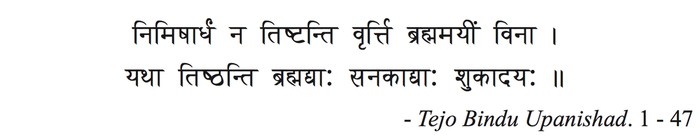
Such ‘contemplation’ is again a mere word. How is that to be contemplated unless it is divided (into the contemplator and the contemplated). When undivided, how is contemplation possible? What function can Infinity have? Do we say that a river after its discharge into the ocean has become an ocean-like river? Why should we then speak of contemplation which has become unbroken, as being that of unbroken Infinity? The statement must be understood in the spirit in which it is made. It signifies the merging into the Infinite.
Self-Illumination or Self-Realisation is similar to it. The Self is ever shining. What does this ‘I-illumination’ mean then? The expression is an implied admission of mind function.
The gods and the sages experience the Infinite continuously and eternally, without their vision being obscured at any moment. Their minds are surmised by the spectators to function; but in fact they do not. Such surmise is due to the sense of individuality in those who draw inferences. There is no mental function in the absence of individuality. Individuality and mind functions are co-existent. The one cannot remain without the other.
The light of the Self can be experienced only in the intellectual sheath. Therefore vijnana of whatever kind (of object or of the Self) depends on the Self being Pure Knowledge.
Talk 214.
Mr. Eknatha Rao, a frequent visitor, asked: Are there not modulations in contemplation according to circumstances?
M.: Yes. There are; at times there is illumination, and then contemplation is easy; at other times contemplation is impossible even with repeated attempts. This is due to the working of the three Gunas (qualities in nature).
D.: Is it influenced by one’s activities and circumstances?
M.: Those cannot influence it. It is the sense of doership - kartrutva buddhi - that forms the impediment.
Mr. Eknatha Rao, a frequent visitor, asked: Are there not modulations in contemplation according to circumstances?
M.: Yes. There are; at times there is illumination, and then contemplation is easy; at other times contemplation is impossible even with repeated attempts. This is due to the working of the three Gunas (qualities in nature).
D.: Is it influenced by one’s activities and circumstances?
M.: Those cannot influence it. It is the sense of doership - kartrutva buddhi - that forms the impediment.
Talk 220.
Mr. B. C. Das, the Physics Lecturer, asked: Contemplation is possible only with control of mind and control can be accomplished only by contemplation. Is it not a vicious circle?
M.: Yes, they are interdependent. They must go on side by side. Practice and dispassion bring about the result gradually. Dispassion is practised to check the mind from being projected outward; practice is to keep it turned inward. There is a struggle between control and contemplation. It is going on constantly within. Contemplation will in due course be successful.
D.: How to begin? Your Grace is needed for it.
M.: Grace is always there. “Dispassion cannot be acquired, nor realization of the Truth, nor inherence in the Self, in the absence of Guru’s Grace,” the Master quoted.
Practice is necessary. It is like training a roguish bull confined to his stall by tempting him with luscious grass and preventing him from straying.
Then the Master read out a stanza from Tiruvachakam, which is an address to the mind, saying: “O humming bee (namely, mind)! Why do you take the pains of collecting tiny specks of honey from innumerable flowers? There is one from whom you can have the whole storehouse of honey by simply thinking or seeing or speaking of Him. Get within and hum to Him (hrimkara).”
D.: Should one have a form in one’s mind, supplemented with reading or chanting God’s name in one’s meditation?
M.: What is mental conception except it be meditation?
D.: Should the form be supplemented by repetition of mantras or dwelling on divine attributes?
M.: When japa is the predominating tendency, vocal japa becomes eventually mental, which is the same as meditation.
Mr. B. C. Das, the Physics Lecturer, asked: Contemplation is possible only with control of mind and control can be accomplished only by contemplation. Is it not a vicious circle?
M.: Yes, they are interdependent. They must go on side by side. Practice and dispassion bring about the result gradually. Dispassion is practised to check the mind from being projected outward; practice is to keep it turned inward. There is a struggle between control and contemplation. It is going on constantly within. Contemplation will in due course be successful.
D.: How to begin? Your Grace is needed for it.
M.: Grace is always there. “Dispassion cannot be acquired, nor realization of the Truth, nor inherence in the Self, in the absence of Guru’s Grace,” the Master quoted.
Practice is necessary. It is like training a roguish bull confined to his stall by tempting him with luscious grass and preventing him from straying.
Then the Master read out a stanza from Tiruvachakam, which is an address to the mind, saying: “O humming bee (namely, mind)! Why do you take the pains of collecting tiny specks of honey from innumerable flowers? There is one from whom you can have the whole storehouse of honey by simply thinking or seeing or speaking of Him. Get within and hum to Him (hrimkara).”
D.: Should one have a form in one’s mind, supplemented with reading or chanting God’s name in one’s meditation?
M.: What is mental conception except it be meditation?
D.: Should the form be supplemented by repetition of mantras or dwelling on divine attributes?
M.: When japa is the predominating tendency, vocal japa becomes eventually mental, which is the same as meditation.
Talk 306.
D.: There is something concrete necessary to meditate upon. How shall we meditate upon ‘I’?
M.: We have become rooted in forms and so we require a concrete form for meditating upon. Only that which we contemplate will in the end remain over. When you contemplate the other thoughts disappear. So long as you need to contemplate there are other thoughts, Where are you? You contemplate because you exist. For the contemplator must contemplate. The contemplation can only be where he is. Contemplation wards off all other thoughts. You should merge yourself in the source. At times we merge in the source unconsciously, as in sleep, death, swoon, etc. What is contemplation? It is merging into the source consciously. Then the fear of death, of swoon, etc. will disappear, because you are able to merge into the source consciously.
Why fear death? Death cannot mean non-being. Why do you love sleep, but not death? Do you not think now? Are you not existing now? Did you not exist in your sleep? Even a child says that it slept well and happily. It admits its existence in sleep, unconsciously though. So, consciousness is our true nature. We cannot remain unconscious. We however say that we were unconscious in our sleep because we refer to qualified consciousness. The world, the body, etc., are so embedded in us that this relative consciousness is taken to be the Self. Does anyone say in his sleep that he is unconscious? He says so now. This is the state of relative consciousness. Therefore he speaks of relative consciousness and not of abstract consciousness. The consciousness is beyond relative consciousness or unconsciousness.
Again reverting to Tiruvachagam, Sri Bhagavan said: All the four foremost saints have given out their experiences in the very first stanza. (1) Undifferentiated worship. (2) Never-failing remembrance. (3) Unrisen thought. (4) The ego is not, the Self is. All mean the same.
D.: But this truth is not realised.
M.: It will be realised in due course. Till then there is devotion (bhakti): “Even for a trice you do not leave my mind.” Does he leave you any moment? It is you who allow your mind to wander away. He remains always steady. When your mind is fixed, you say: “He does not leave my mind even for a trice”. How ridiculous!
D.: There is something concrete necessary to meditate upon. How shall we meditate upon ‘I’?
M.: We have become rooted in forms and so we require a concrete form for meditating upon. Only that which we contemplate will in the end remain over. When you contemplate the other thoughts disappear. So long as you need to contemplate there are other thoughts, Where are you? You contemplate because you exist. For the contemplator must contemplate. The contemplation can only be where he is. Contemplation wards off all other thoughts. You should merge yourself in the source. At times we merge in the source unconsciously, as in sleep, death, swoon, etc. What is contemplation? It is merging into the source consciously. Then the fear of death, of swoon, etc. will disappear, because you are able to merge into the source consciously.
Why fear death? Death cannot mean non-being. Why do you love sleep, but not death? Do you not think now? Are you not existing now? Did you not exist in your sleep? Even a child says that it slept well and happily. It admits its existence in sleep, unconsciously though. So, consciousness is our true nature. We cannot remain unconscious. We however say that we were unconscious in our sleep because we refer to qualified consciousness. The world, the body, etc., are so embedded in us that this relative consciousness is taken to be the Self. Does anyone say in his sleep that he is unconscious? He says so now. This is the state of relative consciousness. Therefore he speaks of relative consciousness and not of abstract consciousness. The consciousness is beyond relative consciousness or unconsciousness.
Again reverting to Tiruvachagam, Sri Bhagavan said: All the four foremost saints have given out their experiences in the very first stanza. (1) Undifferentiated worship. (2) Never-failing remembrance. (3) Unrisen thought. (4) The ego is not, the Self is. All mean the same.
D.: But this truth is not realised.
M.: It will be realised in due course. Till then there is devotion (bhakti): “Even for a trice you do not leave my mind.” Does he leave you any moment? It is you who allow your mind to wander away. He remains always steady. When your mind is fixed, you say: “He does not leave my mind even for a trice”. How ridiculous!
Talk 328.
D.: Is not mental japa better than oral japa?
M.: Oral japa consists of sounds. The sounds arise from thoughts. For one must think before one expresses the thoughts in words. The thoughts form the mind. Therefore mental japa is better than oral japa.
D.: Should we not contemplate the japa and repeat it orally also?
M.: When the japa becomes mental where is the need for the sounds thereof?
Japa, becoming mental, becomes contemplation. Dhyana, contemplation and mental japa are the same. When thoughts cease to be promiscuous and one thought persists to the exclusion of all others it is said to be contemplation. The object of japa or dhyana is the exclusion of several thoughts and confining oneself to one single thought. Then that thought too vanishes into its source - absolute consciousness, i.e., the Self. The mind engages in japa and then sinks into its own source.
D.: The mind is said to be from the brain.
M.: Where is the brain? It is in the body. I say that the body itself is a projection of the mind. You speak of the brain when you think of the body. It is the mind which creates the body, the brain in it and also ascertains that the brain is its seat.
D.: Sri Bhagavan has said in one of the works that the japa must be traced to its source. Is it not the mind that is meant?
M.: All these are only the workings of the mind. Japa helps to fix the mind to a single thought. All other thoughts are first subordinated until they disappear. When it becomes mental it is called dhyana. Dhyana is your true nature. It is however called dhyana because it is made with effort. Effort is necessary so long as thoughts are promiscuous. Because you are with other thoughts, you call the continuity of a single thought, meditation or dhyana. If that dhyana becomes effortless it will be found to be your real nature.
D.: Is not mental japa better than oral japa?
M.: Oral japa consists of sounds. The sounds arise from thoughts. For one must think before one expresses the thoughts in words. The thoughts form the mind. Therefore mental japa is better than oral japa.
D.: Should we not contemplate the japa and repeat it orally also?
M.: When the japa becomes mental where is the need for the sounds thereof?
Japa, becoming mental, becomes contemplation. Dhyana, contemplation and mental japa are the same. When thoughts cease to be promiscuous and one thought persists to the exclusion of all others it is said to be contemplation. The object of japa or dhyana is the exclusion of several thoughts and confining oneself to one single thought. Then that thought too vanishes into its source - absolute consciousness, i.e., the Self. The mind engages in japa and then sinks into its own source.
D.: The mind is said to be from the brain.
M.: Where is the brain? It is in the body. I say that the body itself is a projection of the mind. You speak of the brain when you think of the body. It is the mind which creates the body, the brain in it and also ascertains that the brain is its seat.
D.: Sri Bhagavan has said in one of the works that the japa must be traced to its source. Is it not the mind that is meant?
M.: All these are only the workings of the mind. Japa helps to fix the mind to a single thought. All other thoughts are first subordinated until they disappear. When it becomes mental it is called dhyana. Dhyana is your true nature. It is however called dhyana because it is made with effort. Effort is necessary so long as thoughts are promiscuous. Because you are with other thoughts, you call the continuity of a single thought, meditation or dhyana. If that dhyana becomes effortless it will be found to be your real nature.
Talk 349.
THE THREE PATHS: The three bodies - physical, subtle and causal - are non-self and are unreal. The Self, or ‘I’, is quite different from them. It is due to ignorance that the sense of the Self or the ‘I’ notion is foisted on that which is not Self, and this indeed is bondage. Since from ignorance arises bondage, from Knowledge ensues liberation. To know this from the Guru is sravana.
To reject the three bodies consisting of the five sheaths (physical, vital, mental, gnostic and blissful) as not ‘I’ and to extract through subtle enquiry of “Who am I?” - even as the central blade of grass is delicately drawn out from its whorl - that which is different from all the three bodies and is existent as one and universal in the heart as Aham or ‘I’ and denoted by the words Tvam (in the Scriptural dictum - ‘Tat-tvam-asi’ - That thou art). This process of subtle enquiry is manana or deep contemplation.
THE THREE PATHS: The three bodies - physical, subtle and causal - are non-self and are unreal. The Self, or ‘I’, is quite different from them. It is due to ignorance that the sense of the Self or the ‘I’ notion is foisted on that which is not Self, and this indeed is bondage. Since from ignorance arises bondage, from Knowledge ensues liberation. To know this from the Guru is sravana.
To reject the three bodies consisting of the five sheaths (physical, vital, mental, gnostic and blissful) as not ‘I’ and to extract through subtle enquiry of “Who am I?” - even as the central blade of grass is delicately drawn out from its whorl - that which is different from all the three bodies and is existent as one and universal in the heart as Aham or ‘I’ and denoted by the words Tvam (in the Scriptural dictum - ‘Tat-tvam-asi’ - That thou art). This process of subtle enquiry is manana or deep contemplation.
Talk 528.
A middle-aged Andhra man asked: “Is thought of God necessary for fixing one’s sight (or making the mind one-pointed)?”
M.: What is the practice?
D.: To fix the look.
M.: What for?
D.: To gain concentration.
M.: The practice gives work for the eye right enough; but where is the work for the mind in the process?
D.: What should I do for it?
M.: Thought of God, certainly.
D.: Does the practice make one ill?
M.: Maybe. But all will be rightly adjusted of its own accord.
D.: I practised dhyana for four hours a day and fixation of sight for two hours. I became ill. Then others said that it was owing to my practice. So I gave up dhyana.
M.: Matters will adjust themselves.
D.: Is it not better that the gaze of the eye becomes fixed naturally?
M.: What do you mean?
D.: Is practice necessary to fix the gaze or is it better to leave it to happen of its own accord?
M.: What is practice if it is not an attempt to make something natural? It will become natural after long practice.
D.: Is pranayama necessary?
M.: Yes. It is useful.
D.: I did not practise it. But should I undertake it?
M.: Everything will be all right with sufficient strength of mind.
D.: How shall I get the strength of mind?
M.: By pranayama.
D.: Is food-regulation also necessary?
M.: It is certainly useful.
D.: Should my contemplation be on the Infinite or the limited being?
M.: What do you mean?
D.: May I contemplate on Sri Krishna or Sri Rama alternately?
M.: Bhavana implies khanda i.e., division.
A middle-aged Andhra man asked: “Is thought of God necessary for fixing one’s sight (or making the mind one-pointed)?”
M.: What is the practice?
D.: To fix the look.
M.: What for?
D.: To gain concentration.
M.: The practice gives work for the eye right enough; but where is the work for the mind in the process?
D.: What should I do for it?
M.: Thought of God, certainly.
D.: Does the practice make one ill?
M.: Maybe. But all will be rightly adjusted of its own accord.
D.: I practised dhyana for four hours a day and fixation of sight for two hours. I became ill. Then others said that it was owing to my practice. So I gave up dhyana.
M.: Matters will adjust themselves.
D.: Is it not better that the gaze of the eye becomes fixed naturally?
M.: What do you mean?
D.: Is practice necessary to fix the gaze or is it better to leave it to happen of its own accord?
M.: What is practice if it is not an attempt to make something natural? It will become natural after long practice.
D.: Is pranayama necessary?
M.: Yes. It is useful.
D.: I did not practise it. But should I undertake it?
M.: Everything will be all right with sufficient strength of mind.
D.: How shall I get the strength of mind?
M.: By pranayama.
D.: Is food-regulation also necessary?
M.: It is certainly useful.
D.: Should my contemplation be on the Infinite or the limited being?
M.: What do you mean?
D.: May I contemplate on Sri Krishna or Sri Rama alternately?
M.: Bhavana implies khanda i.e., division.
